
Yes, red light therapy works—but with clear caveats. It is not an overnight miracle or a universal cure-all. Peer-reviewed clinical literature demonstrates that when delivered at precise wavelengths and therapeutic energy doses, red and near-infrared light can stimulate cellular repair, support collagen synthesis, and help reduce mild inflammation.
However, its benefits are subtle, cumulative, and heavily dependent on device quality, power output, and consistent use. Understanding what the science actually supports—versus what marketing claims promise—is key to setting realistic expectations for healthy aging.
What Is Red Light Therapy?
Red light therapy, clinically referred to as photobiomodulation (PBM) or low-level light therapy (LLLT), involves exposing skin and underlying tissue to low-power visible red and invisible near-infrared (NIR) light.
Unlike ultraviolet (UV) radiation from sunlight or tanning beds, red and near-infrared wavelengths do not damage DNA or burn the skin. Unlike ablative cosmetic lasers, photobiomodulation produces no heat or physical injury. Instead, it relies on non-thermal light absorption to induce biological changes at the cellular level.
Most devices utilize two distinct bands within the optical window:
- Visible Red Light (630–660 nm): Absorbed primarily by the epidermis and upper dermis, making it the standard choice for skin tone, superficial wound recovery, and surface texture.
- Near-Infrared Light (810–850+ nm): Invisible to the naked eye, NIR penetrates deeper into tissue—reaching subcutaneous fat, muscle fibers, tendons, and joint structures.
How Photobiomodulation Works at the Cellular Level
The biological mechanism of photobiomodulation centers around the mitochondria, the primary energy-producing organelles in eukaryotic cells.
Specific Wavelengths (630–850 nm)
              │
              ▼
Absorption by Cytochrome c Oxidase (Mitochondria)
              │
              ▼
Nitric Oxide Release ──► Increased ATP Synthesis
              │
              ▼
Temporary Mild ROS Signaling ──► Gene Expression & Cellular Repair
- Light Absorption: Light photons interact with a specific enzyme located in the mitochondrial respiratory chain known as cytochrome c oxidase (CCO).
- Displacement of Nitric Oxide: In stressed or aging cells, nitric oxide (NO) frequently binds to CCO, displacing oxygen and slowing down energy production. Photons of red and near-infrared light help dissociate nitric oxide from CCO.
- Elevated ATP Production: With nitric oxide removed, oxygen binding is restored, allowing the electron transport chain to operate more efficiently. This increases the production of adenosine triphosphate (ATP), the primary cellular energy currency.
- Signaling Pathways and Cellular Repair: The process briefly generates low levels of reactive oxygen species (ROS), which act as gentle cellular signals that activate downstream transcription factors. This triggers antioxidant defense mechanisms, protein synthesis (such as procollagen), and reduced inflammatory cytokine expression.
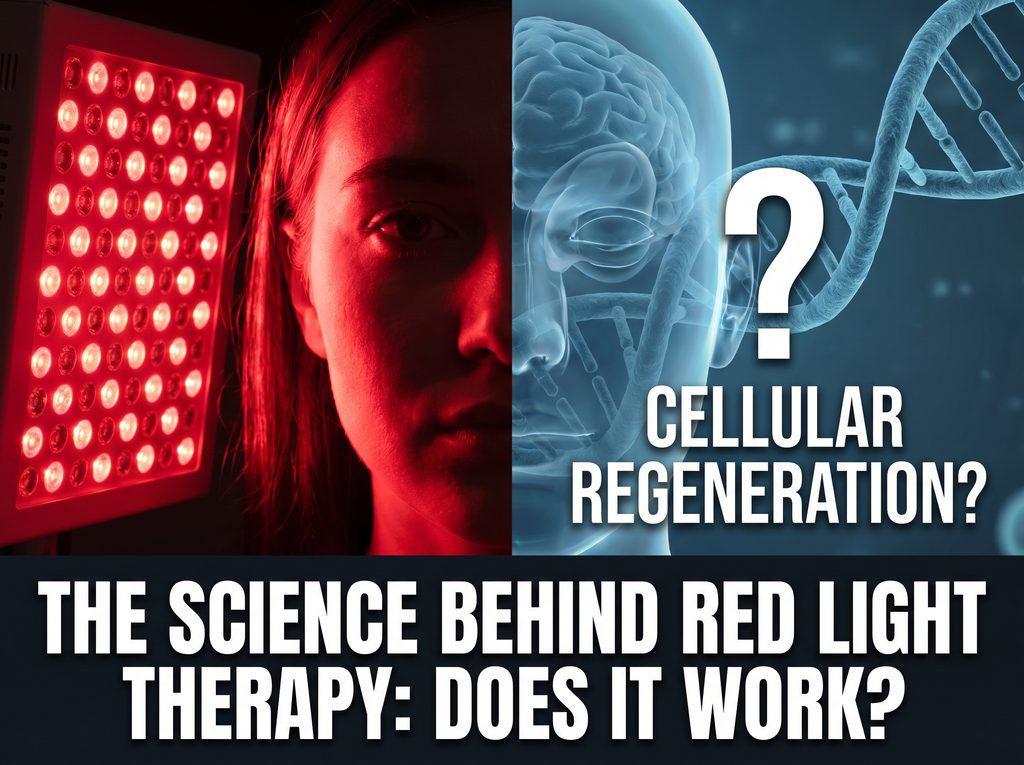
Key Red Light Therapy Benefits: What the Research Shows
The scientific record on photobiomodulation spans thousands of in vitro, animal, and human clinical trials. While study quality varies, several applications have built a strong body of evidence.
1. Red Light Therapy for Skin Rejuvenation
The most thoroughly researched consumer application is red light therapy for skin. Clinical studies indicate that regular exposure to red wavelengths stimulates fibroblast activity, leading to measurable increases in collagen density and elastin fiber remodeling.
- Fine Lines and Wrinkles: Controlled clinical trials have shown modest reductions in wrinkle depth and improvements in skin roughness scores after 8 to 12 weeks of consistent sessions.
- Skin Texture and Radiance: By improving microcirculation and dermal matrix density, users frequently observe smoother texture and improved skin firmness.
- Mild Acne Management: Red light is often paired with blue light (415 nm). While blue light targets Cutibacterium acnes bacteria, red light reduces the underlying inflammatory erythema and promotes tissue healing.
2. Muscle Recovery and Joint Comfort
Near-infrared wavelengths can reach skeletal muscle and joint capsules. Research in sports medicine suggests that pre- or post-exercise NIR light exposure may reduce delayed onset muscle soreness (DOMS), attenuate markers of muscle damage (such as creatine kinase), and support recovery between training bouts.
For older adults, trials exploring red light for mild joint stiffness show temporary relief from minor aches and improved functional mobility.
3. Hair Density and Follicle Health
Photobiomodulation has FDA clearance as an adjunct therapy for androgenetic alopecia in both men and women. Red light directed at the scalp helps prolong the anagen (growth) phase of the hair follicle, increase localized microvascular circulation, and stimulate follicular stem cells, resulting in modest gains in hair thickness and shaft diameter over 4 to 6 months.
Established Science vs. Emerging Areas
To navigate the landscape of healthy aging technologies, it is helpful to separate robustly documented findings from early-stage, speculative research.
| Application Area | Evidence Level | What the Data Actually Indicates |
|---|---|---|
| Dermal Collagen & Texture | Established | Consistent 8–12 week use improves collagen density, skin roughness, and fine lines. |
| Hair Thinning (Alopecia) | Established | Multi-month protocols increase hair count and density in mild-to-moderate thinning. |
| Muscle Soreness & Recovery | Moderate / Strong | Attenuates post-exercise inflammation and reduces DOMS severity. |
| Brain Health & Cognition | Emerging | Transcranial NIR shows promise for neural oxygenation, but clinical protocols remain non-standardized. |
| Fat Loss / “Body Contouring” | Weak / Inconclusive | May cause temporary lipid leakage from adipocytes, but does not substitute for dietary or metabolic interventions. |
| Systemic Vitality Claims | Unproven | Claims regarding rapid organ detox, disease cures, or whole-body rejuvenation lack rigorous human validation. |
What Remains Uncertain: Limits and Nuance
While the biological principles are sound, several important variables explain why individual outcomes vary significantly:
- The Biphasic Dose-Response (Arndt-Schulz Law): Photobiomodulation follows a non-linear curve. Too little light energy produces no cellular response, while excessive light exposure can inhibit cellular activity and negate benefits. More is not always better.
- Lack of Universal Protocols: Clinical studies frequently use varying parameters (power densities, wavelengths, treatment durations, and frequencies). There is no universal “gold-standard” protocol that fits every individual skin type or goal.
- Skin Barrier and Pigmentation Variables: Melanin in darker skin tones absorbs a portion of visible light near the surface. While red light therapy is generally safe across all Fitzpatrick skin types, optical energy transmission can vary slightly.
Buyer’s Guide: Choosing an Effective At-Home Device
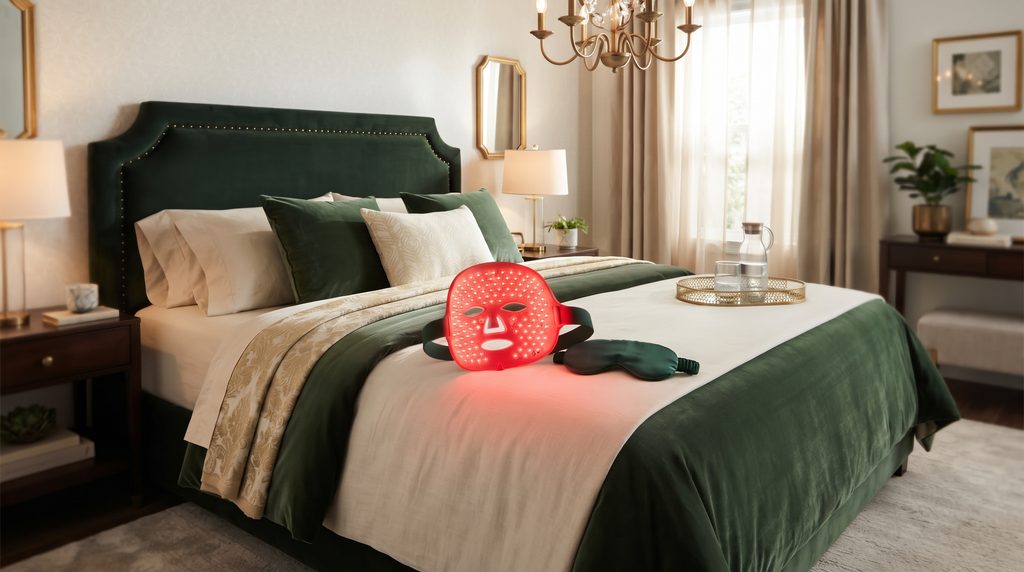
The market is flooded with consumer gadgets ranging from handheld wands to whole-body panels. If you are evaluating a device—such as a targeted panel or an LED face mask—use these criteria to ensure you are getting a biologically active tool rather than an overpriced nightlight.
Key Specs to Check:
├── Wavelengths: 630–660 nm (Red) and/or 810–850 nm (Near-Infrared)
├── Irradiance: 30–100 mW/cm² at targeted treatment distance
├── Testing: Independent third-party irradiance verification
└── Build: Medical-grade silicone or sturdy modular panels with eye protection
- Target Specific Wavelengths: Verify that the manufacturer discloses exact nanometer ratings. Look for 630 nm, 660 nm, 810 nm, 830 nm, or 850 nm. Vague labels like “broadband red” are a red flag.
- Check Irradiance (Power Density): Measured in milliwatts per square centimeter (mW/cm2). At-home facial masks typically deliver between 20 and 50 mW/cm2 directly against the skin, while standing panels deliver 40 to 100 mW/cm2 at a distance of 6 inches.
- Form Factor Matters: An LED face mask sits directly against facial contours for hands-free, uniform coverage. Flat LED panels provide higher power output and the flexibility to treat larger body areas like back, shoulders, or legs.
- Safety & Eye Protection: Near-infrared light is invisible to the human eye, meaning your natural blink reflex will not protect against high-intensity exposure. Always use blackout goggles or built-in silicone eye shields when using high-powered panels.
Frequently Asked Questions
How long does it take to see results from red light therapy?
Cellular changes occur immediately, but visible improvements in skin texture, tone, and hair density require regular sessions (3 to 5 times per week) for at least 8 to 12 weeks.
Can red light therapy cause skin cancer or hyperpigmentation?
No. Red and near-infrared wavelengths contain no mutagenic ultraviolet (UVA/UVB) rays. However, individuals prone to melasma should avoid devices that generate noticeable heat, as thermal energy can trigger pigment flare-ups.
Are at-home LED face masks as effective as in-office clinical treatments?
In-office clinical beds and lasers generally offer higher irradiance and shorter session times under professional supervision. However, because photobiomodulation relies heavily on consistent frequency, a well-engineered at-home device used 3 to 4 times a week can deliver comparable cosmetic outcomes over time.
The Vitaminspoon Takeaway: Red light therapy is a validated, non-invasive tool for cellular energy, skin rejuvenation, and tissue recovery. It works best not as a standalone miracle, but as a consistent, long-term complement to sun protection, quality sleep, regular movement, and nutrient-dense nutrition.