Beauty supplements work when they provide specific, bioavailable building blocks—such as hydrolyzed collagen peptides, ceramides, and targeted antioxidants like vitamin C—that reach the deeper dermal layers via systemic circulation. While oral supplements cannot replace foundational sun protection or a nutrient-dense diet, robust clinical evidence shows they can measurably improve skin hydration, elasticity, and barrier function.
The concept of “beauty from within” has grown from a marketing trend into a serious area of dermatological research. We often focus on topical serums and creams, yet the outer surface of your skin (the epidermis) acts as a protective barrier designed to keep external substances out.
Because topical products rarely penetrate deep into the lower dermis where structural proteins are synthesized, beauty supplements for skin aim to nourish the dermal matrix from the inside out.
However, not every ingestible gummy or capsule delivers on its claims. To separate scientific substance from marketing hype, let’s explore what the clinical evidence reveals about popular supplements for skin health.
1. The Dermal Matrix: How Ingestibles Reach Your Skin
To understand why certain oral nutrients work, it helps to look at the architecture of the skin:
- Epidermis: The outermost protective shield that prevents water loss and blocks pathogens.
- Dermis: The supportive middle layer consisting of an extracellular matrix rich in collagen fibers, elastin, and glycosaminoglycans (like hyaluronic acid).
- Blood Supply: Blood vessels deliver nutrients directly to fibroblasts—the specialized cells in the dermis responsible for producing collagen and maintaining skin resilience.
When you consume bioactive nutrients, digestive enzymes break them down into absorbable fragments. These enter your bloodstream and travel to dermal capillaries, stimulating fibroblasts and replenishing lipid reserves in a way topical formulations cannot replicate.
2. Collagen Supplements: The Evidence-Backed Heavyweight
Among all healthy aging supplements targeted at skin appearance, collagen supplements possess the strongest body of clinical evidence.
Intact collagen is too large for the digestive tract to absorb efficiently. Effective formulations use hydrolyzed collagen peptides—collagen that has been enzymatically broken down into short amino acid chains (dipeptides and tripeptides, particularly prolyl-hydroxyproline).
Intact Dietary Collagen (Large Molecules)
                   │
                   ▼ (Enzymatic Hydrolysis)
Bioactive Collagen Peptides (Short Chains)
                   │
                   ▼ (Absorption via Gut & Circulation)
Reaches Dermal Fibroblasts ──► Stimulates Natural Collagen & Hyaluronic Acid Synthesis
What Clinical Studies Show:
- Elasticity & Firmness: Meta-analyses of randomized, double-blind, placebo-controlled trials have consistently observed that daily intake of 2.5 g to 10 g of hydrolyzed collagen for 8 to 12 weeks yields measurable improvements in skin elasticity.
- Hydration: Collagen peptides signal fibroblasts to upregulate hyaluronic acid production, helping the dermis hold onto moisture.
- Fine Line Softening: By supporting structural density in the dermis, regular intake can reduce the visual appearance of fine lines associated with natural collagen decline.
3. Phytoceramides: Reinforcing the Lipid Barrier
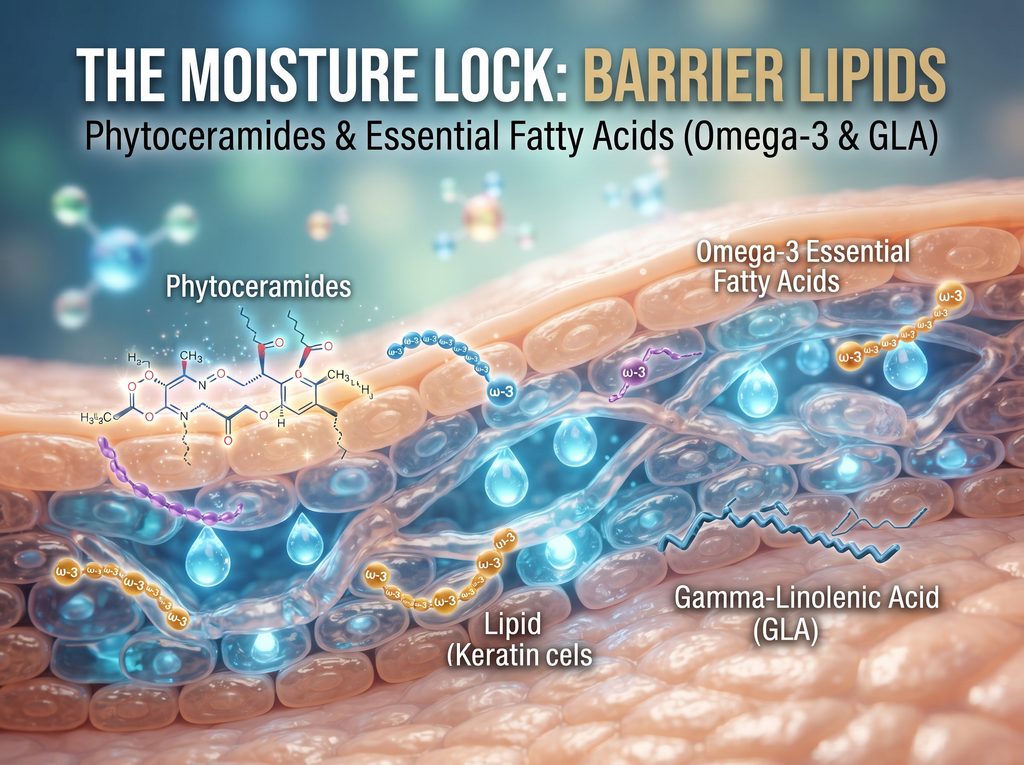
Ceramides are natural waxy lipids that make up over 50% of the skin’s outer barrier. They act like the “mortar” between cellular “bricks,” locking in moisture and shielding against environmental irritants.
As we age, natural ceramide production drops, leading to dry skin, increased trans-epidermal water loss (TEWL), and heightened sensitivity.
- Oral Phytoceramides: Derived from plants like wheat, rice, or konjac, oral ceramides are absorbed in the gut and incorporated into the stratum corneum through internal lipid transport.
- The Research: Human clinical trials show that taking plant-derived ceramides (typically 30 mg to 350 mg daily, depending on the source extract) for 4 to 12 weeks significantly reduces dry, flaky patches and improves overall barrier hydration.
4. Antioxidants and Co-Factors: Shielding Cellular Health
Oxidative stress triggered by UV radiation and urban pollution breaks down collagen and accelerates signs of aging. Certain micronutrients play well-documented supporting roles in skin maintenance:
Vitamin C (Ascorbic Acid)
Vitamin C is an essential co-factor for the enzymes prolyl hydroxylase and lysyl hydroxylase, which stabilize collagen’s triple-helix structure. Without adequate internal vitamin C, your body cannot efficiently synthesize new collagen fibers.
Astaxanthin & Carotenoids
Astaxanthin is a potent keto-carotenoid derived from microalgae (Haematococcus pluvialis). Unlike topicals, oral carotenoids accumulate in dermal layers, where they act as internal free-radical scavengers, dampening oxidative strain from everyday UV exposure (though they should never replace broad-spectrum topical sunscreen).
Zinc
Zinc is a trace mineral necessary for cellular turnover, wound healing, and regulating oil production. Adequate systemic zinc levels support clear, balanced skin.
5. What Works vs. What’s Overhyped: The Evidence Spectrum
Navigating the supplement aisle requires knowing which ingredients are backed by clinical data and which are based primarily on lab theory or clever marketing.
| Supplement Ingredient | Primary Target | Level of Clinical Evidence | What the Science Says |
|---|---|---|---|
| Hydrolyzed Collagen | Elasticity & Dermal Density | High (Robust) | Multiple human meta-analyses show improvements in elasticity and hydration after 8–12 weeks. |
| Phytoceramides | Skin Barrier & TEWL Reduction | Moderate–High | Proven to reduce trans-epidermal water loss and increase stratum corneum moisture. |
| Vitamin C + Zinc | Collagen Synthesis & Repair | High (Established) | Essential co-factors for fundamental dermal cellular function. |
| Oral Hyaluronic Acid | Deep Hydration | Moderate | Low-molecular-weight oral HA shows promise in modest hydration boosts; trials are growing. |
| Biotin (for non-deficient adults) | Hair & Skin Appearance | Low | Critical if you have a true clinical deficiency; minimal proven benefit for general skin appearance in healthy adults. |
| Glutathione (Oral non-liposomal) | Brightening & Tone | Low–Emerging | Rapidly broken down in the gut unless formulated in advanced liposomal or sublingual forms. |
6. How to Build an Evidence-Based Skin Supplement Routine
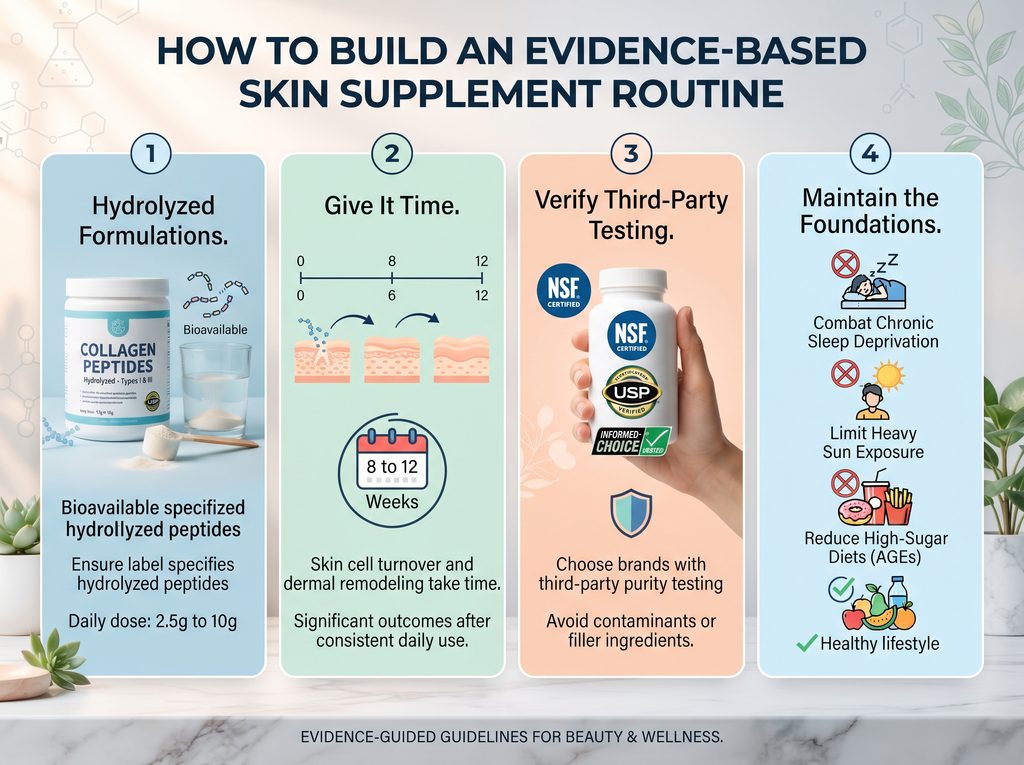
If you choose to incorporate beauty supplements into your wellness routine, follow these practical, evidence-guided guidelines:
- Prioritize Hydrolyzed Formulations: If choosing collagen, ensure the label specifies hydrolyzed peptides (types I and III are most abundant in skin) with a daily dose of 2.5 g to 10 g.
- Give It Time: Skin cell turnover and dermal remodeling take time. Most clinical trials observe significant outcomes only after 8 to 12 weeks of consistent daily use.
- Verify Third-Party Testing: Choose brands that utilize third-party purity testing (such as NSF, USP, or Informed-Choice) to avoid contaminants or filler ingredients.
- Maintain the Foundations: Supplements cannot overcome chronic sleep deprivation, heavy sun exposure, or high-sugar diets that accelerate advanced glycation end-products (AGEs).
Frequently Asked Questions
Can beauty supplements replace my topical skincare routine?
No. Oral supplements and topical products work synergistically. Topicals protect the surface barrier, cleanse, and provide localized UV defense, while ingestibles nourish the deeper dermal layers and deliver systemic cellular building blocks.
Is marine collagen better than bovine collagen for skin?
Both marine (fish) and bovine (cattle) sources provide predominantly Type I collagen, which is the primary collagen type in human skin. Marine collagen peptides have slightly smaller average molecular weights, which may aid rapid absorption, but quality hydrolyzed bovine collagen shows comparable clinical efficacy in human trials.
Are oral hyaluronic acid supplements effective?
Yes, modern clinical research indicates that specific low-to-medium molecular weight hyaluronic acid supplements can be absorbed in the intestines and reach dermal tissues, helping to bind moisture and improve subjective skin smoothness.
The Vitaminspoon Takeaway
True “beauty from within” isn’t magic—it is biology. Hydrolyzed collagen peptides, plant ceramides, and essential antioxidant co-factors like vitamin C offer genuine, science-supported benefits for skin elasticity and hydration when taken consistently over several months. To maximize your results, view these supplements as a targeted complement to everyday fundamentals: daily sun protection, restorative sleep, and a nutrient-rich, whole-food diet.