

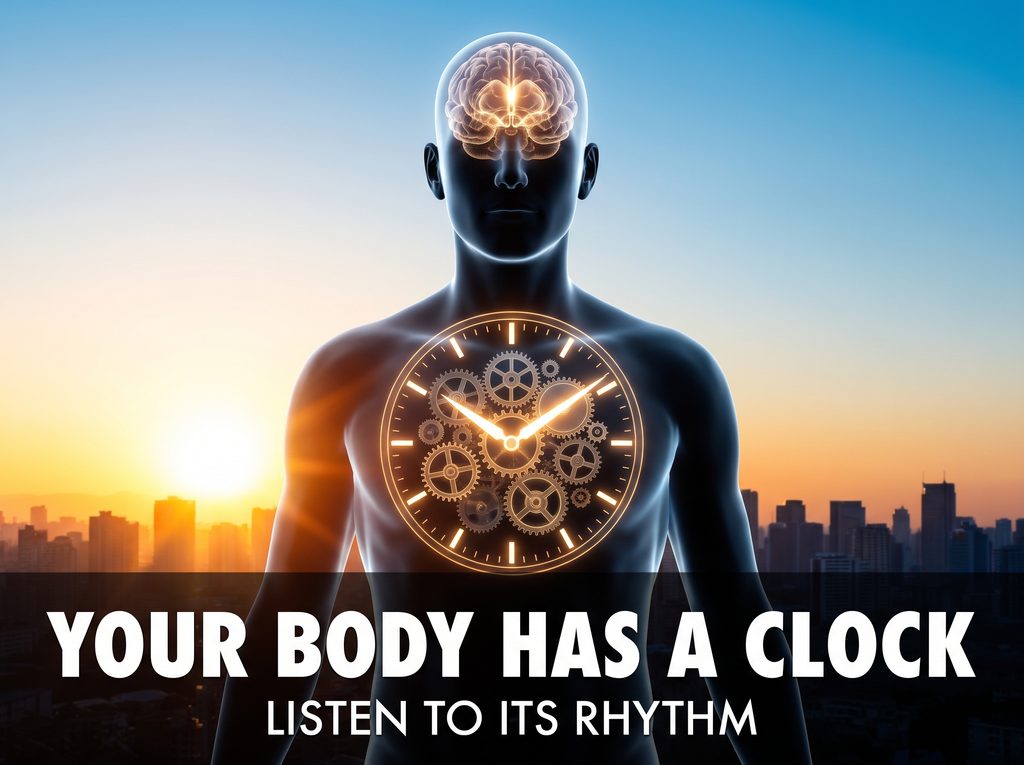
Your circadian rhythm matters because it acts as your body’s internal master operating system, synchronizing virtually every physiological process—from hormone secretion and metabolic rate to DNA repair and immune function—across an approximate 24-hour cycle.
When this internal body clock is aligned with the natural 24-hour day-night cycle, your cells operate at peak efficiency. When it is chronicially desynchronized by artificial light, erratic sleep schedules, or late-night eating, cellular repair pathways stall, sleep quality deteriorates, and the biological aging process accelerates.
Understanding how your body clock works provides the foundation for building evidence-based anti-aging routines and an effective longevity lifestyle.
1. It Is Run by a “Master Clock” in Your Brain
Deep within the hypothalamus sits a cluster of roughly 20,000 nerve cells known as the suprachiasmatic nucleus (SCN). The SCN functions as the central pacemaker for the entire body.
- Light as the Primary Cue: Specialized photoreceptors in your eyes (intrinsically photosensitive retinal ganglion cells, or ipRGCs) detect environmental light levels and send direct electrical signals to the SCN.
- Hormonal Orchestration: The SCN uses these signals to dictate the timing of critical hormones—signaling the pineal gland to release melatonin as darkness falls and prompting the adrenal glands to release cortisol in the morning to wake you up.
2. Every Single Organ Has Its Own “Peripheral Clock”
While the SCN is the conductor, your liver, pancreas, gut, muscles, and skin cells all possess their own localized peripheral clocks. These cellular clocks are driven by self-regulating feedback loops of specific proteins (such as CLOCK, BMAL1, and PER).
          Master Clock (SCN in Brain)
                      │
        ┌─────────────┴─────────────┐
        ▼                           ▼
Light / Dark Cues          Peripheral Clocks
(Sets SCN Timing)          ├── Liver (Food timing)
                           ├── Pancreas (Insulin)
                           ├── Muscles (Exercise)
                           └── Skin (DNA repair)
For optimal health, the master clock in your brain and the peripheral clocks in your organs must remain in sync. When you eat a heavy meal at midnight, your liver clock is forced to activate while your brain clock is preparing for sleep—creating internal “circadian misalignment.”
3. Better Sleep Quality Directly Fuels Cellular Repair
Circadian alignment is the single greatest driver of sleep health and restorative better sleep. Sleep is not passive downtime; it is an active state of cellular maintenance.
- The Glymphatic System: During deep non-REM sleep, the brain’s waste-clearance system (the glymphatic pathway) becomes up to 10 times more active, flushing out metabolic waste products such as beta-amyloid proteins.
- Tissue Regeneration & Growth Hormone: The majority of daily human growth hormone (HGH) release occurs during slow-wave sleep, promoting tissue repair, protein synthesis, and muscle maintenance.
4. Circadian Clocks Control Your Metabolic Efficiency and Insulin Sensitivity
Your body does not process nutrients the same way at 8:00 AM as it does at 10:00 PM. Human insulin sensitivity follows a distinct circadian curve, peaking in the morning and early afternoon and dropping sharply in the evening.
- Morning Metabolism: Early in the day, beta cells in the pancreas produce insulin efficiently, allowing glucose to enter cells with minimal blood sugar spikes.
- Nighttime Shift: As melatonin levels rise to prepare for sleep, insulin secretion decreases. Consuming large, carbohydrate-dense meals late at night leads to elevated blood glucose and increased fat storage, putting unnecessary stress on metabolic pathways.
5. Circadian Alignment Is a Cornerstone of Healthy Aging
Emerging geroscience highlights circadian disruption as an underlying driver of cellular senescence and chronic low-grade inflammation (often termed “inflammaging”).
| Biological Function | Circadian Peak Window | Why It Matters for Healthy Aging |
| DNA & Skin Repair | Nighttime (10 PM – 4 AM) | Skin cells shift from daytime UV defense to nighttime cellular renewal and collagen synthesis. |
| Cardiovascular Recovery | Nighttime (Sleep) | Blood pressure naturally dips by 10–20% (“nocturnal dipping”), giving the vascular system essential rest. |
| Immune Surveillance | Early Morning to Noon | Cytokine production and white blood cell activity fluctuate to defend against environmental pathogens. |
| Physical Strength & Reaction Time | Late Afternoon (4 PM – 7 PM) | Core body temperature and muscle tone peak, making this the optimal window for athletic performance. |
6. Modern “Zeitgebers” Can Easily Throw You Out of Sync
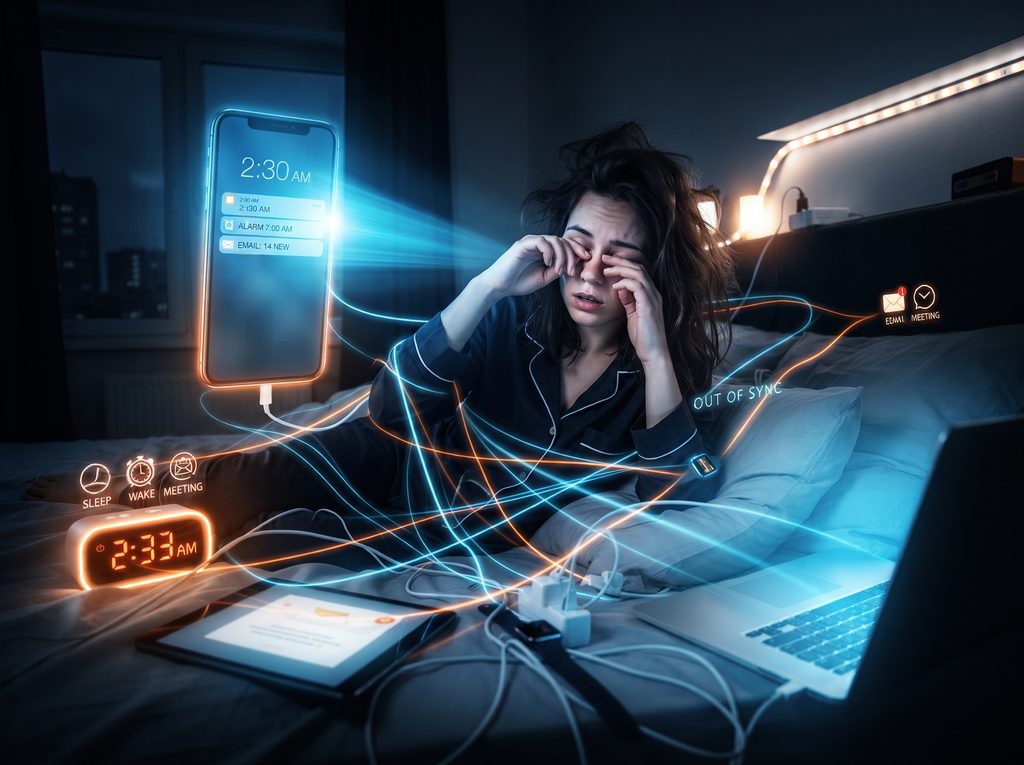
The term zeitgeber (German for “time giver”) refers to external environmental cues that train your circadian rhythm. In our modern environment, unnatural zeitgebers send conflicting signals to the brain:
- Blue Light at Night: Light from phones, laptops, and overhead LEDs emits peak wavelengths around 450–480 nm, suppressing nighttime melatonin synthesis by up to 50%.
- Social Jet Lag: Going to bed and waking up significantly later on weekends disrupts SCN rhythmicity, causing Monday morning fatigue that mirrors international travel.
- Irregular Meal Timing: Snacking continuously across a 16-hour window prevents peripheral metabolic clocks from entering their necessary fasting-and-repair phase.
7. Simple, Science-Backed Routines Can Reset Your Body Clock
You do not need complicated equipment to optimize your circadian rhythm. Establishing consistent daily anchor points strengthens your biological clock:
- Get Direct Morning Sunlight: View natural sunlight for 10–20 minutes within an hour of waking. This sets your cortisol awakening response and starts the countdown timer for evening melatonin release.
- Establish a Consistent Wake Time: Keep your wake-up time consistent within a 30-to-60-minute window, even on weekends.
- Adopt Time-Restricted Eating: Aim to consume all meals within an 8- to 12-hour window during daylight hours, finishing dinner at least 2 to 3 hours before sleep.
- Dim Evening Lighting: Switch to warmer, low-level lighting after sunset, and turn off illuminated screens 60 minutes before bed.
Frequently Asked Questions
Can taking melatonin supplements fix a broken circadian rhythm?
Melatonin supplements act as a circadian chronobiotic (a timing cue) rather than a direct sedative. While low doses can help shift sleep timing for jet lag or shift work, they cannot compensate for late-night blue light exposure or irregular lifestyle habits.
Is it possible to permanently shift your body clock if you work night shifts?
It is challenging because sunlight, social cues, and daytime noises constantly pull the SCN back toward a diurnal rhythm. Shift workers can minimize disruption by using blackout curtains, wearing blue-blocking glasses during the morning commute home, and maintaining strict sleep timing.
How does circadian rhythm change as we get older?
As people age, the amplitude of circadian hormone rhythms (such as growth hormone and melatonin) tends to flatten, and the sleep phase often shifts earlier (advanced sleep phase). Consistent morning light exposure and physical activity are especially vital for older adults to maintain strong circadian signals.
The Vitaminspoon Takeaway: Your circadian rhythm is the biological blueprint governing how your body repairs, metabolizes, and renews itself every single day. True longevity and vibrant energy do not start with exotic supplements—they begin by honoring your internal body clock with morning light, regular meal timing, and restorative sleep.