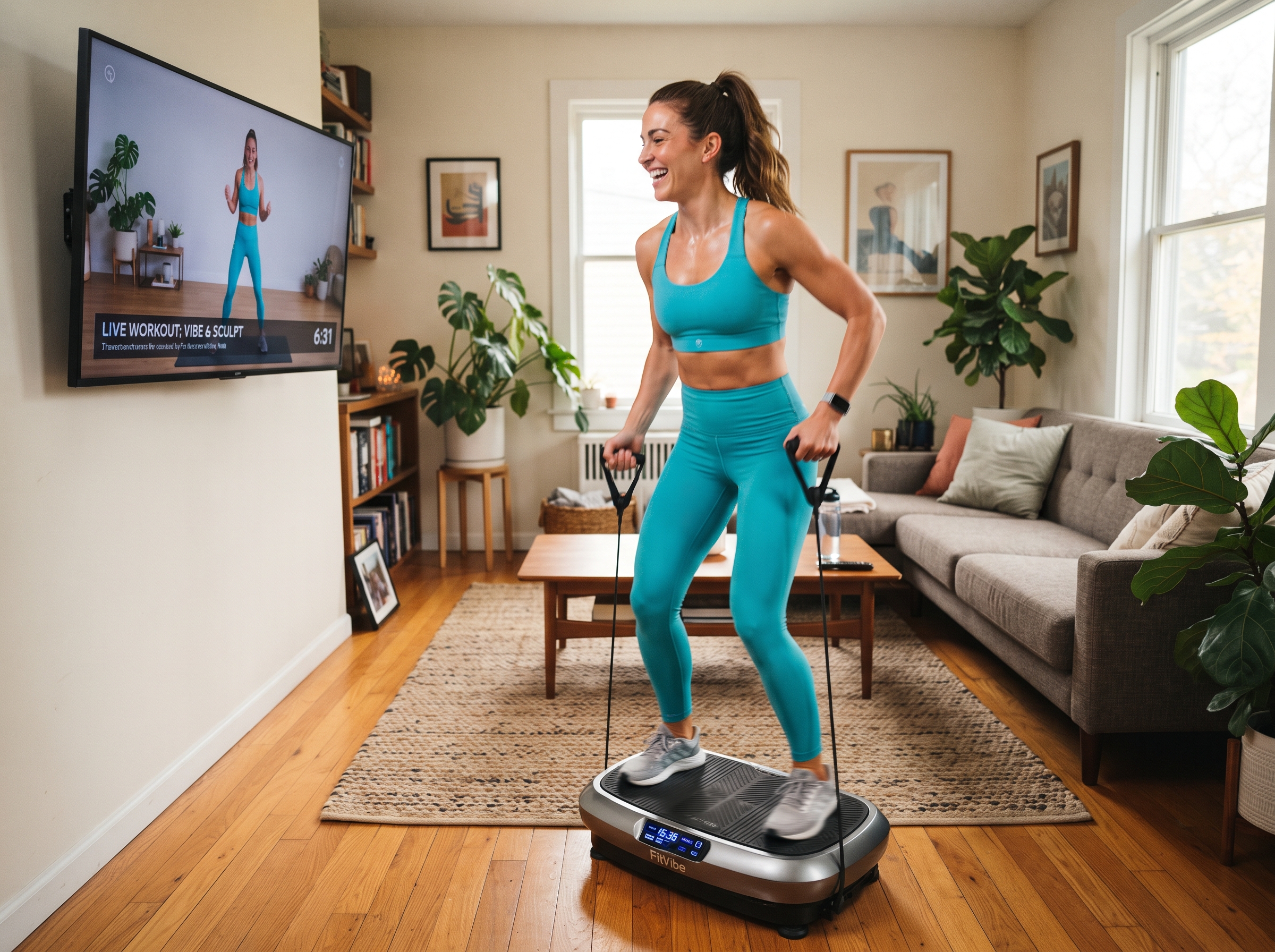
Whole-Body Vibration (WBV) therapy works by transmitting rapid mechanical oscillations through your body, triggering reflexive muscle contractions up to 30–50 times per second. Clinical evidence shows that WBV can improve muscle strength, support bone mineral density, enhance balance and circulation, and aid joint mobility—making it an effective, low-impact complement to traditional exercise, especially for healthy aging.
The Rise of Whole-Body Vibration in Modern Wellness
When you first step onto a vibration plate, the experience feels unlike any traditional workout. As the platform oscillates beneath your feet, rapid micro-adjustments ripple through your legs, core, and posture muscles.
While whole-body vibration (WBV) technology might look like a trendy wellness gadget, its origins trace back decades to aerospace research. Space agencies used vibration therapy to help astronauts combat rapid muscle atrophy and bone density loss caused by zero-gravity environments. Today, exercise physiologists and longevity researchers view WBV as a promising tool for physical resilience and healthy aging.
At Vitaminspoon, our mission is to make evidence-based wellness practical, transparent, and grounded in real science. We help you cut through the sensationalized anti-aging claims so you can build daily routines that genuinely support your healthspan. Let’s look at what clinical research actually says about vibration plates—and how to separate proven benefits from emerging speculation.
How Whole-Body Vibration Works in the Body
To understand the benefits of a vibration plate, it helps to understand the underlying physiology. WBV does not replace movement; rather, it amplifies mechanical signals to your neuromuscular system.
┌─────────────────────────────────────────────────────────────┐
│                 HOW VIBRATION PLATES WORK                   │
├─────────────────────────────────────────────────────────────┤
│  Rapid Mechanical Oscillations (20–50 Hz)                   │
│                            │                                │
│                            ▼                                │
│  Tonic Vibration Reflex (TVR) Triggers Muscle Spindles      │
│                            │                                │
│                            ▼                                │
│  Involuntary Muscle Contractions (30–50x per Second)        │
│                            │                                │
│                            ▼                                │
│  Enhanced Neuromuscular Fiber Recruitment & Blood Flow       │
└─────────────────────────────────────────────────────────────┘
When you stand on an oscillating platform, the rapid upward and downward movements create subtle gravitational changes. Your body responds through the tonic vibration reflex (TVR)—an involuntary spinal reflex that causes muscle fibers to contract and relax at the same frequency as the plate (typically 20 to 50 times per second).
By engaging both fast-twitch and slow-twitch muscle fibers reflexively, vibration plates increase motor unit recruitment with lower conscious effort and reduced joint strain compared to heavy weightlifting.
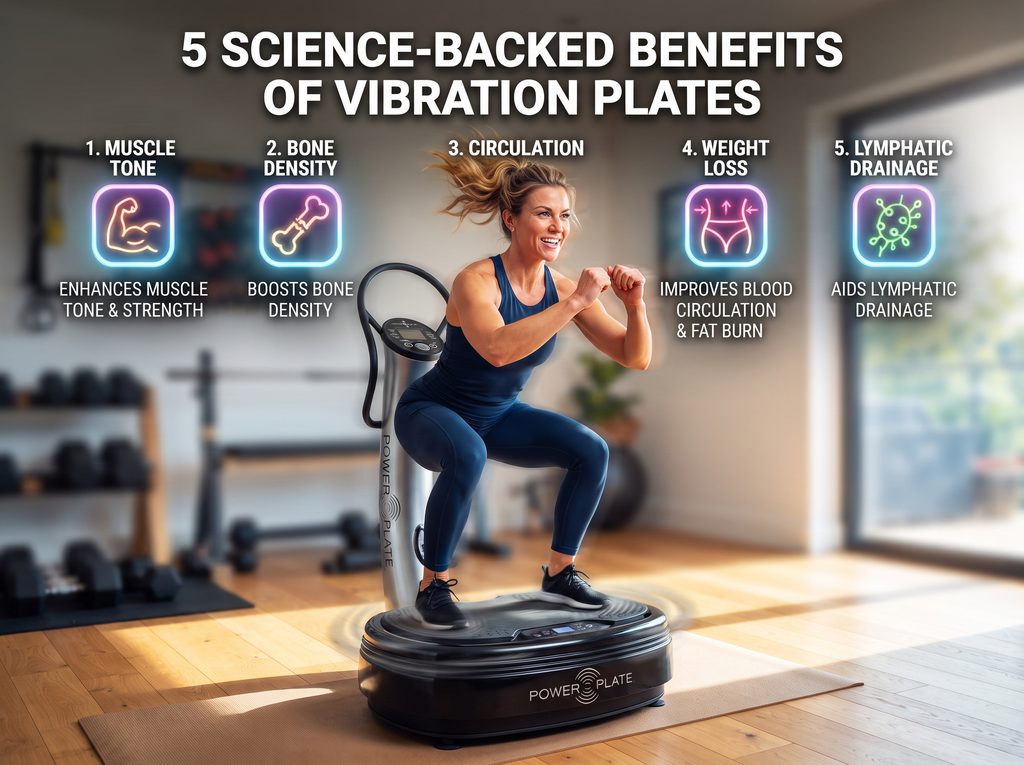
5 Science-Backed Benefits of Vibration Plates
Clinical research over the past two decades highlights several key physical areas where whole-body vibration provides meaningful support:
1. Muscle Activation and Functional Strength
Standing on a vibration plate—especially while performing active movements like shallow squats, calf raises, or plank holds—increases muscle activation. Studies demonstrate that WBV helps improve lower-body explosive strength and functional power in adults, making daily tasks like climbing stairs or standing up from a chair feel easier.
2. Bone Mineral Density Support
Mechanical load is essential for stimulating osteoblasts (the cells responsible for building new bone matrix). The rapid mechanical pulsing of WBV provides low-amplitude, high-frequency kinetic signals that help signal bone remodeling. Research suggests that consistent WBV training supports bone mineral density in the hip and spine, particularly in postmenopausal women.
3. Circulation and Lymphatic Flow
The rapid contraction and relaxation cycles of skeletal muscle act as a natural mechanical pump for your vascular system. Clinical studies show that short sessions on a vibration plate significantly increase peripheral skin blood flow and microcirculation. This rapid fluid movement also supports lymphatic drainage, helping clear localized metabolic waste after exercise.
4. Balance, Mobility, and Proprioception
As we age, the sensory receptors in our joints and feet (proprioceptors) can become less sensitive, increasing the risk of missteps. The constant micro-adjustments required during a WBV session stimulate spinal reflex pathways and challenge proprioceptive feedback. Clinical trials show marked improvements in postural stability, dynamic balance, and gait speed among older adults using WBV.
5. Joint-Friendly Exercise Complement
For individuals experiencing joint discomfort or mobility limitations, traditional high-impact exercise can sometimes feel intimidating or uncomfortable. WBV offers a low-impact alternative that stimulates muscle engagement and metabolic activity without applying high compressive forces to sensitive knee or hip joints.
Established Evidence vs. Emerging Research Frontiers
When exploring new health technologies, keeping an objective perspective is essential. Here is how established exercise science compares to cutting-edge research:
| Wellness Domain | Established Clinical Evidence | Emerging Research Frontiers |
| Neuromuscular Function | WBV increases muscle fiber recruitment and short-term lower-body force output through reflexive contractions. | Studying optimal frequency settings (Hz) tailored to specific muscle groups and individual neuromuscular rehab. |
| Bone & Joint Health | Low-amplitude vibration provides mechanical signals that help preserve bone mineral density over time. | Investigating combination protocols using WBV alongside targeted bone-supportive nutrients like Vitamin K2 and Vitamin D3. |
| Metabolic Health | WBV increases acute energy expenditure and modest oxygen consumption compared to passive standing. | Researching whether long-term WBV modulates systemic inflammatory markers and resting insulin sensitivity. |
How to Get Started Safely
If you are curious about incorporating a vibration plate into your routine, keep these foundational safety guidelines in mind:
- Start Small: Begin with short sessions—just 5 to 10 minutes per day at a lower frequency (20–30 Hz)—to allow your nervous system and connective tissues to adapt.
- Keep Knees Slightly Bent: Never lock your knees or joints straight while standing on a moving platform. A soft bend in the knees absorbs vibrations safely through the muscle belly rather than transferring force directly into the joint cartilage or spine.
- Combine with Active Movement: While standing passively on the plate offers basic circulatory benefits, performing gentle active exercises (like wall sits, bodyweight squats, or heel raises) yields significantly greater physical adaptations.
Frequently Asked Questions (FAQ)
Can a vibration plate replace regular exercise?
No. Vibration plates are best viewed as an effective complement to a well-rounded routine, not a total replacement. Combining WBV with regular walking, functional strength training, and adequate rest provides the most comprehensive support for long-term healthspan.
Are there contraindications for using a vibration plate?
Yes. Because WBV introduces mechanical forces throughout the body, individuals who are pregnant, have acute joint replacements, active blood clots, pacemaker devices, advanced gallstones, or recent surgical wounds should consult a qualified healthcare provider before using a vibration platform.
How often should you use a vibration plate?
Most clinical trials evaluate protocols of 3 to 4 sessions per week, lasting anywhere from 10 to 20 minutes per session. Consistency over several weeks yields far better outcomes than infrequent, long sessions.
Exploring modern wellness technologies like vibration plates is an exciting way to support your physical strength, balance, and mobility as you age. But exercise and mechanical movement are only half of the healthspan equation—your cells also require high-quality, bioavailable raw materials to rebuild, adapt, and thrive.
At Vitaminspoon, we make it easy to act on longevity science. Our curated collection of high-purity, third-party tested supplements—ranging from cellular energy precursors and essential omega-3s to targeted joint and bone support—delivers research-backed nutritional reinforcement without the confusion of wading through hundreds of unvetted options.
Explore our research-backed formulations at Vitaminspoon today, and give your body the complete support it needs for lifetime vitality!