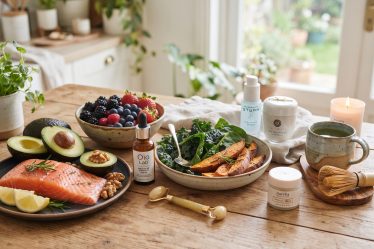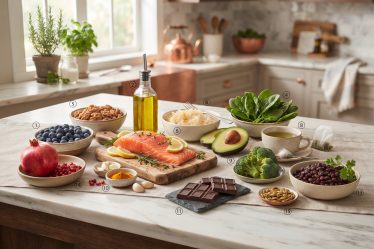

What we put on our plates does far more than just satisfy hunger—it delivers bioactive compounds, polyphenols, and micronutrients that communicate directly with our cells. Exploring the principle of food as medicine reveals how everyday dietary staples act as cellular fuel, helping support longevity, skin structure, brain function, and overall healthy aging.
Every bite you take sends biochemical signals throughout your body. Modern nutritional science and geroscience increasingly study whole foods not just for basic calories, but for their unique ability to support cellular repair pathways and metabolic resilience.
At Vitaminspoon, we believe understanding what you eat should be fun, fascinating, and grounded in real science—free from exaggerated fads or miracle cures. Here are 50 fun food facts showcasing the incredible biology, chemistry, and benefits of nutrient-dense eating.
1. Fun Food Facts: Skin, Collagen & Dermal Health
Your skin’s extracellular matrix relies on steady dietary building blocks to maintain hydration, elasticity, and defense against environmental oxidative stress.
- Bell peppers outperform oranges in Vitamin C: A single red bell pepper provides nearly three times the vitamin C of an orange—a critical co-factor for the enzymes that cross-link and synthesize collagen.
- Cooked tomatoes offer superior lycopene: Heating tomatoes with healthy fats breaks down plant cell walls, dramatically increasing the bioavailability of lycopene, a carotenoid that settles in dermal layers to help buffer against UV-induced oxidative strain.
- Avocados deliver lutein for skin elasticity: Beyond monounsaturated fats, avocados supply lutein and zeaxanthin, which clinical studies associate with improved skin elasticity and hydration.
- Bone broth provides direct amino building blocks: Simmering animal connective tissue yields glycine, proline, and hydroxyproline—the fundamental amino acids your fibroblasts need to build collagen.
- Wild salmon protects cell membranes: Rich in astaxanthin and omega-3 fatty acids, wild salmon helps maintain the lipid bilayer of skin cells, helping to minimize moisture loss.
- Kiwi is a dense collagen booster: Packing more vitamin C per ounce than citrus fruits, kiwi also contains zinc, aiding regular cellular turnover.
- Green tea polyphenols guard dermal fibers: Epigallocatechin gallate (EGCG) in green tea inhibits matrix metalloproteinases (MMPs)—enzymes that break down collagen when skin experiences oxidative stress.
- Pumpkin seeds are zinc powerhouses: Just a handful provides a meaningful portion of your daily zinc requirement, essential for epidermal barrier repair.
- Pomegranates feed skin renewal: Pomegranates contain ellagic acid and punicalagins, which emerging lab research suggests support healthy cellular turnover.
- Dark chocolate supports dermal blood flow: High-flavanol cocoa (70% or greater) has been shown in human trials to support microcirculation in dermal capillaries, aiding oxygen and nutrient delivery.
2. Longevity & Cellular Health: Science of Anti-Aging Food
Nutrient-sensing pathways like AMPK and sirtuins respond dynamically to specific phytochemicals, making certain staples standout foods for longevity.
- Broccoli sprouts pack sulforaphane: Three-day-old broccoli sprouts contain up to 50 times more glucoraphanin than mature broccoli. When chewed, this converts to sulforaphane, a potent activator of the Nrf2 cellular antioxidant pathway.
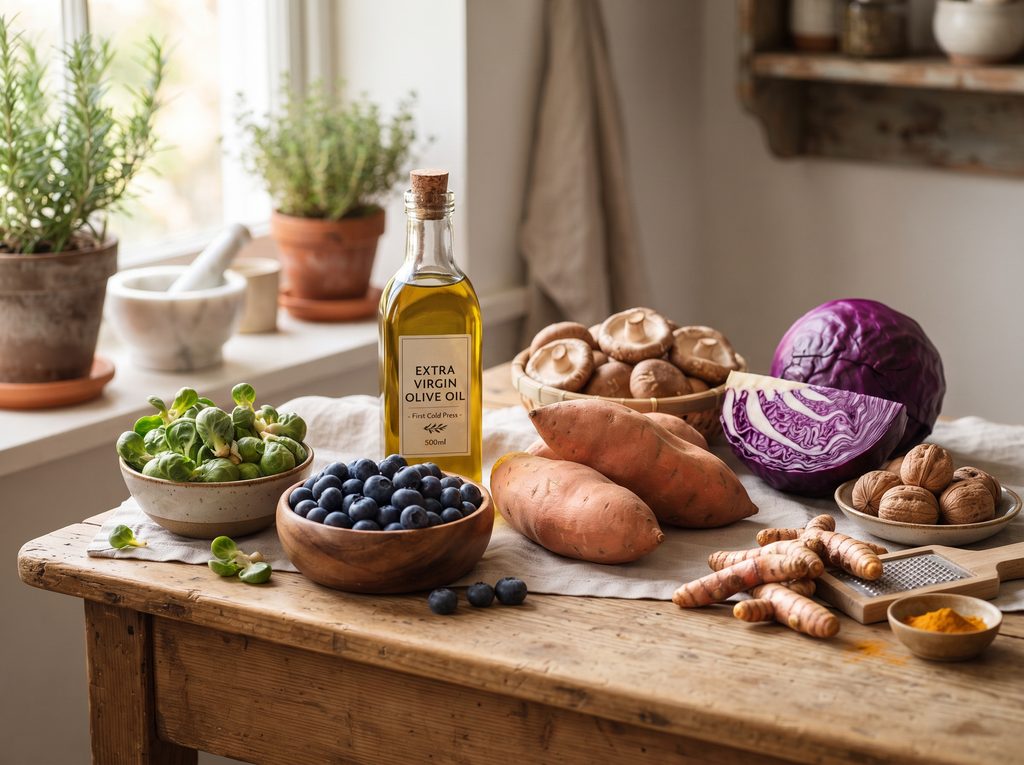
- Blueberries carry anthocyanins to cells: Blueberries have one of the highest antioxidant capacities among common fruits, helping to quench free radicals and support DNA integrity.
- Extra virgin olive oil contains oleocanthal: This polyphenol shares a similar molecular mechanism with common anti-inflammatory compounds, supporting healthy vascular aging.
- Purple sweet potatoes hold longevity pigments: In traditional longevity hotspots like Okinawa, purple sweet potatoes deliver dense anthocyanins that support mitochondrial performance.
- Shiitake mushrooms provide ergothioneine: Mushrooms are the premier dietary source of ergothioneine, an amino acid with specialized cellular transporters in human tissue often dubbed a “longevity vitamin.”
- Red cabbage delivers cost-effective polyphenols: Gram for gram, red cabbage yields more anthocyanins than many high-priced specialty berries.
- Walnuts supply plant-based ALA: Walnuts are the only tree nut with significant alpha-linolenic acid (ALA), supporting cellular membrane fluidity.
- Garlic’s allicin requires a brief pause: Crushing garlic and letting it rest for 10 minutes before heating allows alliinase to convert alliin into bioactive allicin.
- Capers are the richest source of quercetin: These tiny pickled buds pack more quercetin per gram than almost any other food, supporting cellular stress defense.
- Turmeric needs black pepper for absorption: The primary compound in turmeric, curcumin, is poorly absorbed on its own; pairing it with piperine from black pepper increases its bioavailability by up to 2,000%.

3. Brain Health & Cognitive Vitality
The brain consumes roughly 20% of your daily energy. These nutrients help maintain neural membranes and support neurotransmitter synthesis.
- Egg yolks are rich in choline: Egg yolks are one of nature’s best sources of choline, a precursor to acetylcholine, the neurotransmitter critical for memory and learning.
- Rosemary carries carnosic acid: Inhaling or consuming rosemary exposes you to carnosic acid, a terpene being researched for its neuroprotective properties.
- Fatty fish build brain structures: Docosahexaenoic acid (DHA) makes up a large percentage of the brain’s polyunsaturated fatty acids.
- Pumpkin seeds supply magnesium for synapses: Magnesium in pumpkin seeds supports synaptic plasticity and healthy sleep architecture.
- Beets promote cerebral blood flow: Dietary nitrates in beetroot convert into nitric oxide, relaxing blood vessels and supporting oxygen flow to the brain.
- Dark leafy greens preserve cognitive health: Observational studies suggest that one daily serving of spinach, kale, or collard greens is associated with slower rates of cognitive decline.
- Coffee stimulates cellular cleaning: Beyond alertness, coffee consumption is linked with the upregulation of autophagy—the cellular clean-up process—in brain and liver tissues in animal models.
- Turmeric crosses the blood-brain barrier: Curcumin can cross into neural tissues, where it is being studied for its ability to clear metabolic debris.
- Sunflower seeds deliver vitamin E: Vitamin E protects neural lipid membranes from lipid peroxidation.
- Matcha balances caffeine with L-theanine: This unique amino acid promotes alpha brain wave activity, fostering calm focus without the jitters.
4. Heart & Vascular Performance
Vascular elasticity and balanced lipid profiles keep our organ systems functioning smoothly as we mature.
- Oats contain cholesterol-binding beta-glucan: The soluble fiber beta-glucan forms a gel in the digestive tract that binds cholesterol-rich bile acids, assisting in healthy lipid management.
- Flaxseeds deliver lignans: Ground flaxseeds are the richest dietary source of lignans, plant estrogens with cardioprotective and antioxidant properties.
- Chia seeds expand 10x in water: This hydrophilic expansion creates a gel that slows carbohydrate digestion and helps stabilize blood sugar curves.
- Dark chocolate supports nitric oxide: Cocoa flavanols stimulate the vascular endothelium to produce nitric oxide, promoting healthy artery relaxation.
- Pistachios support healthy blood pressure: Rich in potassium and phytosterols, pistachios show favorable vascular relaxation effects in clinical trials.
- Arugula is a natural nitrate booster: Arugula contains some of the highest concentrations of naturally occurring nitrates among all leafy greens.
- Apples feed vascular health with epicatechin: Eating apples with the skin on delivers epicatechin and pectin, supporting healthy cholesterol clearance.
- Cranberries prevent bacterial adhesion: Cranberry proanthocyanidins prevent E. coli and other bacteria from adhering to bladder and vascular cell walls.
- Beans and lentils provide resistant starch: Legumes improve arterial stiffness biomarkers by feeding gut microbes that generate protective short-chain fatty acids.
- Hawthorn berries have centuries of cardiovascular use: Rich in bioflavonoids, these tart berries support smooth muscle tone around blood vessels.
5. Gut Microbiome, Metabolism & Immunity
Your gut microbiome regulates immune surveillance and metabolic flexibility, transforming food into bioactive metabolites.
- Kimchi introduces diverse probiotics: Fermented cabbage delivers Lactobacillus strains that support mucosal barrier integrity.
- Sourdough lowers the glycemic response: Long fermentation degrades phytates and partially pre-digests gluten, blunting blood glucose spikes.
- Green bananas are full of resistant starch: Unripe bananas pass unabsorbed through the small intestine, providing a prime fuel source for butyrate-producing gut bacteria.
- Ginger accelerates gastric emptying: Gingerols in fresh ginger stimulate gut motility, reducing bloating and upper digestive discomfort.
- Onions and leeks contain inulin: These allium vegetables provide inulin, a prebiotic fiber that selectively nourishes beneficial Bifidobacteria.
- Miso paste supports gut-associated lymph tissue: Fermented soybean paste supplies active enzymes and beneficial microbes that train immune responses.
- Artichokes are prebiotic champions: Globe and Jerusalem artichokes rank among the most concentrated natural sources of prebiotic fructooligosaccharides (FOS).
- Citrus peels contain limonene: The zest of lemons and oranges holds d-limonene, an essential oil that aids phase I and II liver detoxification enzymes in lab models.
- Sauerkraut brine is a microbial broth: Just a tablespoon of raw sauerkraut juice contains billions of live lactic acid bacteria.
- Cayenne pepper’s capsaicin stimulates thermogenesis: Capsaicin interacts with TRPV1 receptors, slightly boosting metabolic rate and circulation.
The Spectrum of Evidence: Foods vs. Concentrated Supplements
While the concept of food as medicine highlights the value of whole-food nutrition, it is helpful to understand how whole foods compare to targeted supplements:
| Nutrition Approach | Strengths | Limitations |
| Whole Foods | Delivers complex synergy of fiber, micronutrients, water, and polyphenols that work together. | Phytochemical concentrations vary by soil, season, and cooking method. |
| Targeted Supplements | Provides consistent, standardized therapeutic dosages of specific molecules (e.g., concentrated curcumin, hydrolyzed collagen peptides). | Lacks the broad, complex matrix of whole foods; intended to complement, not replace, diet. |
Frequently Asked Questions
What does “food as medicine” actually mean?
It is the evidence-based recognition that whole, nutrient-dense foods supply bioactive compounds that support physiological processes, reduce oxidative strain, and promote long-term cellular health. It complements—rather than replaces—conventional medical care.
Can eating certain foods prevent biological aging?
No food can halt or reverse chronological aging. However, eating foods rich in polyphenols, healthy fats, fiber, and lean amino acids helps support healthspan by minimizing cellular damage and maintaining metabolic vitality over time.
Want to understand the science behind healthy aging? Explore more evidence-based wellness insights from Vitaminspoon.