

Skeletal muscle is far more than a tool for lifting heavy objects; it is your primary metabolic organ, a glucose sink, and your body’s physical insurance policy against age-related decline. Maintaining lean muscle mass preserves joint stability, supports metabolic health, protects bone density, and releases signaling proteins called myokines that help regulate systemic inflammation as you age.
Welcome to Vitaminspoon, your evidence-backed sanctuary for cutting through longevity hype and discovering actionable, science-based daily habits.
Muscle: Your Secret Metabolic Powerhouse
When most people think of healthy aging, they imagine heart health, skin elasticity, or sharp cognitive function. While those are undeniably crucial, skeletal muscle is often the unsung hero tying them all together.
Starting around age 30, adults naturally begin to lose roughly 3% to 8% of their muscle mass per decade—a phenomenon known as age-related muscle loss, or primary sarcopenia. The rate often accelerates after age 60. However, loss of muscle isn’t just an aesthetic concern or a matter of diminished lifting strength; it fundamentally changes your internal biochemistry.
Think of skeletal muscle as your body’s largest metabolic engine. Every time you move, contract, or stretch a muscle, you trigger a cascade of cellular events that influence how your body handles energy, stress, and repair.
3 Biological Reasons Muscle Is Your Longevity Insurance Policy
To understand why physical strength is so tightly linked with healthspan—the period of life spent free from severe chronic illness—we have to look beneath the surface at cellular and metabolic signaling pathways.
The diagram below illustrates how regular muscle contraction creates a systemic cascade that influences your entire body:
SVG
1. The Ultimate Glucose Sink
Skeletal muscle accounts for roughly 80% of post-meal glucose disposal in healthy individuals. When you contract your muscles, specialized glucose transport proteins (specifically GLUT4) migrate to the cell surface, pulling sugar out of your bloodstream directly into muscle tissue—even without high levels of insulin.
Maintaining muscle mass protects your metabolic flexibility, helping stabilize daily blood sugar and reducing long-term metabolic stress on your internal organs.
2. Myokines: Your Internal Pharmacy
When muscle fibers contract, they release specialized signaling peptides called myokines (such as Interleukin-6 in its acute anti-inflammatory exercise role, or Irisin). These chemical messengers travel through the bloodstream to interact with fat cells, the liver, and even the brain, promoting fat oxidation, supporting brain plasticity, and helping regulate low-grade systemic inflammation.
3. Physical Integrity, Mobility, and Bone Density
Muscle doesn’t exist in a vacuum; it pulls directly on bone tissue via tendons. This mechanical strain stimulates osteoblasts—the cells responsible for building new bone matrix—which helps preserve skeletal density. Furthermore, strong muscles protect your joints, keeping your balance sharp and ensuring effortless daily mobility.
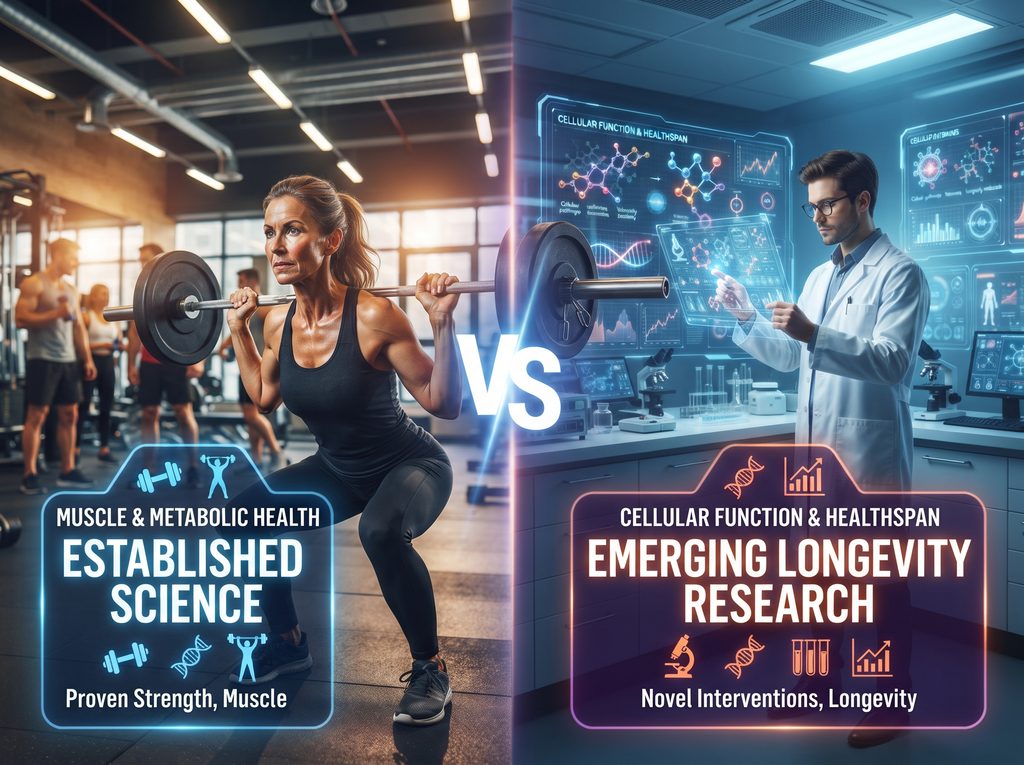
Established Science vs. Emerging Longevity Research
When navigating longevity information, separating proven physiological facts from early-stage experimental concepts ensures you spend your time and energy wisely.
| Focus Area | Established Science | Emerging Research |
| Muscle Maintenance | Progressive resistance training combined with adequate daily protein directly stimulates muscle protein synthesis (MPS) across all age groups. | Targeted amino acid derivatives and urolithin A compounds exploring enhanced mitochondrial recycling (mitophagy) in muscle cells. |
| Metabolic Health | Higher muscle mass improves insulin sensitivity and daily basal energy expenditure. | Myokine-targeted therapies aiming to mimic muscle-to-organ signaling pathways in preclinical settings. |
| Physical Function | Grip strength and leg power strongly correlate with overall vitality, physical independence, and healthy aging outcomes. | Wearable neuromuscular stimulation tech designed to support muscle tone during periods of forced inactivity. |
3 Simple Strategies to Protect Your Muscle as You Age
Preserving muscle doesn’t require living in a gym or embarking on hyper-intense workouts that leave your joints aching. Consistency and deliberate daily choices yield the greatest long-term returns.
- Embrace Progressive Resistance 2–3 Times a Week: Focus on foundational movement patterns—pushing, pulling, squatting, and carrying. Using bodyweight exercises, resistance bands, or free weights challenges muscle fibers and keeps them responsive.
- Prioritize High-Quality Dietary Protein: Muscle tissue requires a steady supply of essential amino acids (especially leucine) to repair and rebuild. Aim to distribute protein evenly across your meals to maximize daily muscle protein synthesis.
- Support Recovery and Mitigate Stress: Muscle is built during rest, not during workouts. Prioritize 7 to 9 hours of restorative sleep to allow growth hormone levels to peak, and ensure adequate hydration to keep muscle tissue supple.
Frequently Asked Questions (FAQ)
Is it ever too late to build muscle if I haven’t exercised in years?
No! Studies consistently demonstrate that individuals in their 70s, 80s, and beyond can successfully build muscle mass, increase strength, and improve mobility through structured resistance training. Muscle tissue remains adaptable throughout your entire life.
Is cardiovascular exercise enough to preserve muscle health?
While aerobic exercise like walking or cycling is phenomenal for heart and metabolic health, it doesn’t provide sufficient mechanical tension to prevent age-related muscle loss. Combining resistance training with regular walking offers the most complete protocol for healthy aging.
How does muscle impact healthy aging in women specifically?
For women, hormonal shifts during peri-menopause and menopause accelerate bone density loss and muscle reduction. Building lean muscle provides crucial mechanical protection for bone density, supports metabolic speed, and maintains joint stability through middle age and beyond.
Building a lifestyle that protects your strength, energy, and mobility shouldn’t feel complex or overwhelming. At Vitaminspoon, our curated collection of habit-building daily planners, high-performance water bottles, and movement accessories makes it effortless to put longevity science into practice. By pairing evidence-based information with practical daily tools, you can stay motivated, track your progress, and support your physical vitality step by step.
Ready to build a resilient foundation for lifelong wellness? Explore our research-backed guides and lifestyle tools at Vitaminspoon today!